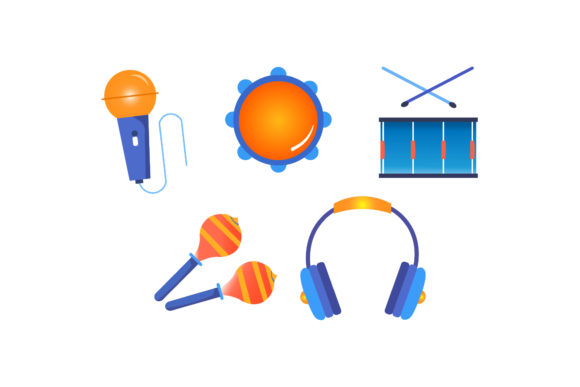
Musical Instrument Illustrations Set: Graphics & Design Assets for Sellers
When I first opened the Musical Instrument Illustrations Set, I was preparing a fresh batch of listings for my Etsy shop and Creative Fabrica store. I had been looking for a cohesive graphic design asset that could work across multiple product types without feeling repetitive or generic. The set arrived in six formats, each file sized at 1920 by 1280 pixels, which gave me enough resolution to test on mockups, previews, and sample products before I committed to a full listing. That initial impression matters when you sell digital products, because the first thing a buyer sees is the thumbnail, and the second thing they check is whether the design can actually be used for what they need. This set felt like it could bridge that gap between visual appeal and practical utility.
First Impressions and Niche Appeal
The visual personality of the Musical Instrument Illustrations Set leans toward a clean, modern, and slightly decorative style. It is not overly playful or cartoonish, nor is it aggressively minimalist. It sits in a comfortable middle ground where the illustrations feel like they could work for a music teacher’s printable reward chart, a musician’s thank-you card, a conservatory’s social media post, or a small business branding a line of instrument-themed merchandise. The mood is professional but warm, and that is a hard balance to strike in a clipart bundle. I could see this set appealing to music tutors, band directors, instrument retailers, podcasters in the music niche, and even wedding invitation designers looking for subtle musical motifs.
What stood out to me was how the illustrations avoided looking like generic stock vectors. There is a consistency in line weight and shading that suggests the designer paid attention to visual hierarchy. Each instrument reads clearly at a glance, which is important when you are shrinking a design down for a sticker or sizing it up for a tote bag print. The set includes a range of instruments, and the variety gives you room to build themed collections without sourcing from multiple different asset packs. That alone saves time when you are trying to launch a new product line quickly.
Real-World Product Applications for Sellers
I tested the Musical Instrument Illustrations Set across several product types that I regularly sell in my shop. The first thing I did was import the SVG files into Cricut Design Space to see how the cutting lines behaved. The paths were clean and did not require manual cleanup, which is a huge time saver when you are producing multiple cut files for a bundle. I used the PNG files with transparent backgrounds to create sublimation designs for tumblers and ceramic mugs, and the resolution held up well at full size. The JPG versions worked for printable wall art once I added a subtle colored background in Canva, and the AI and EPS files gave me full control when I needed to tweak colors or scale elements for a specific layout.
For Etsy sellers, this set is versatile enough to support a wide range of product categories. I could see it being used for:
- SVG design bundles for music-themed Cricut projects
- PNG design packs for print-on-demand t-shirt graphics
- Clipart sets for digital scrapbooking and planner stickers
- Sublimation designs for mugs, tumblers, and coasters
- Printable wall art for music studios and classrooms
- Greeting cards and invitation templates for recitals and concerts
- Canva templates for social media posts and blog graphics
- Packaging design for small businesses selling instrument accessories
- Brand identity elements for music teachers and private instructors
I also tested the DXF files for my Silhouette projects, and the import process was smooth. If you sell on Creative Fabrica or other creative marketplaces, you could easily package this set as a multi-format bundle and price it competitively. The commercial license allows you to use the designs in finished products, which is essential for any serious digital product creator. I always check that before I list anything, and this set passes that check without ambiguity.
Testing Before You List
Before I uploaded any finished product based on the Musical Instrument Illustrations Set, I ran a few practical tests. The first test was thumbnail previews. I placed the design on a white background, a dark background, and a colored background to see how the contrast held up. On white, the illustrations looked crisp and professional. On dark backgrounds, some of the thinner lines lost a bit of definition, so I added a subtle white stroke in my editing software to improve visibility. That is a quick fix, but it is the kind of thing you want to catch before a customer receives a file that looks muddy in their own preview.
I also checked the PNG transparency carefully. Sometimes clipart sets have stray pixels or jagged edges around the subject, but the Musical Instrument Illustrations Set had clean, well-masked files. That matters for sublimation designs and layered Cricut projects where you do not want background artifacts showing up in the final product. I printed a sample sticker on matte paper and a sample mug in my sublimation oven, and the colors reproduced accurately. The canvas size of 1920 by 1280 pixels gave me enough resolution for most standard print products, though I would recommend scaling up carefully for large-format prints like posters or banners. In those cases, the vector AI and EPS formats are your best bet.
Where This Set Shines and Where to Be Careful
The Musical Instrument Illustrations Set works best in medium to large product previews, themed bundles, and decorative layouts. It shines when used as a focal element on a t-shirt, a central motif on a mug, or a repeating pattern on a tote bag. I also found it effective for social media graphics and blog headers, especially when paired with a clean sans serif or a warm handwritten font. The illustrations have enough detail to look premium but not so much that they clutter a small space.
I would use this set carefully in a few scenarios. Tiny sticker details, for example, may lose some of the finer lines if you scale the design down too much. If you are producing a sheet of small planner stickers, consider using only the larger, simpler instrument illustrations and avoid the ones with intricate internal details. Similarly, for Cricut or Silhouette cutting projects, always test the cut lines on a small piece of vinyl before running a full batch. The SVG paths were clean in my test, but I always recommend a test cut for any new asset. Avoid using the illustrations on dark backgrounds without checking contrast first, and be mindful of text-heavy templates where the design might compete with the text rather than complement it. In those cases, use the illustration as a subtle background element or a small accent rather than the main visual.
Practical Seller Notes for the Musical Instrument Illustrations Set
If you are planning to sell finished products using this design, here are a few practical notes from my experience. First, organize the files clearly for your customers. The set comes in six formats, so I created a folder structure that separates the AI, EPS, SVG, DXF, JPG, and PNG files. I also included a simple instruction sheet explaining what each format is for. That reduces customer support questions and increases perceived value. Second, confirm the commercial licensing terms before you list any product. The description states that the design is easy to use and comes in multiple formats, but you should always verify that you can sell finished goods with the design. In this case, the commercial license is included, which is exactly what you need for Etsy, print-on-demand, and creative marketplace sales.
I also tested the design with several font styles to see what paired well. A clean sans serif font like Montserrat or Inter gave the illustrations a modern, instructional feel. A serif font like Playfair Display added a more elegant, vintage look that worked well for invitation templates. A handwritten font gave the set a friendly, approachable vibe that I used for greeting cards and social media templates. I recommend testing a few options before you settle on a final product layout. The design itself is neutral enough to support multiple brand identities, which is a strong selling point if you are creating a bundle of templates or a multi-product collection.
Finally, I always test a product mockup before publishing a listing. I used the Musical Instrument Illustrations Set on a t-shirt mockup, a mug mockup, and a digital download preview. The mockups helped me see how the design would look in a real selling context, and they also gave me a chance to catch any sizing or alignment issues before the first sale. That step alone has saved me from listing a product that needed to be reworked later. I recommend every seller do the same, especially when working with a new graphic design asset for the first time.
Overall, the Musical Instrument Illustrations Set is a solid addition to any digital product creator’s toolkit. It offers flexibility, commercial viability, and a visual style that can adapt to multiple niches. Whether you are building a collection of music-themed printables, launching a line of instrument merchandise, or creating Canva templates for teachers and small business owners, this set gives you a polished foundation to work from. With careful testing and thoughtful presentation, it can support a professional-looking product line that resonates with buyers and stands out in a crowded marketplace.